The digital age is stirring up transformation in modern research labs. No surprises there. Larger datasets. Tighter timelines. Stricter compliance demands. Dispersed teams across departments, sites, and even continents. There’s more data, complexity, and pressure, and addressing these challenges with the right technology is essential to both speed and quality.
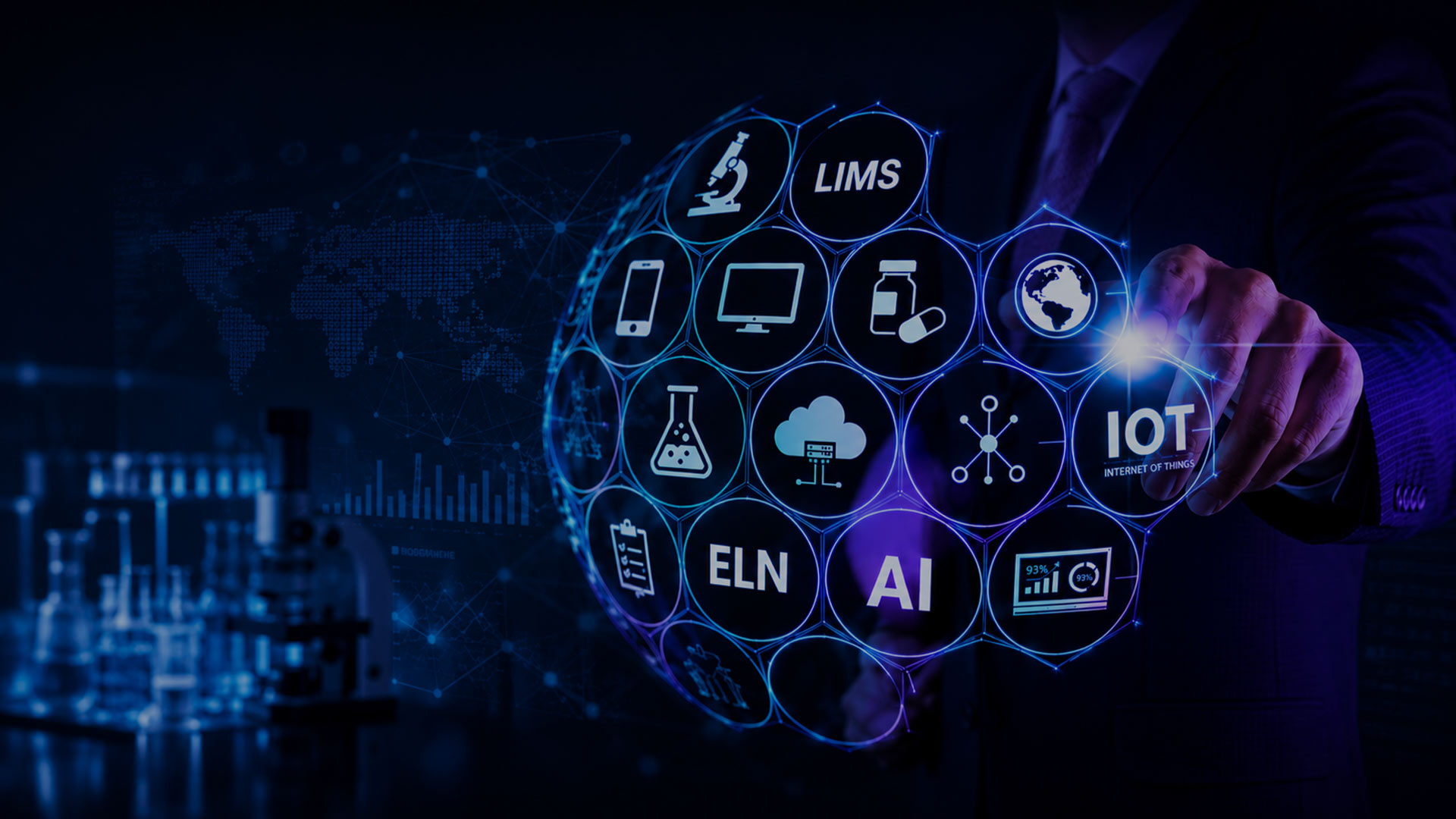
Enter the “alphabet soup” of digital tools: LIMS, ELNs, IoT, and AI. While they may sound like a bowl of jargon, these tools help reduce manual work, improve accuracy, and enhance collaboration. Each tool plays a different role, and when combined, they create the perfect recipe for smarter, more connected lab management.
Breaking Down the Ingredients
Below are the key digital ingredients being used in modern labs:
- LIMS (Laboratory Information Management System): Think of this as the main ingredient. Acting as the lab’s operational backbone, an LIMS tracks samples, automates workflows, manages inventory, and maintains data integrity.
- ELN (Electronic Lab Notebook): This tool captures the scientific record (experiments, protocols, observations, and research notes) in a centralized hub. They make it easier to organize and share information, helping teams stay aligned and structured.
- IoT (Internet of Things): This connects your digital lab to your physical one. Sensors and connected instruments capture real-time equipment status and other context to provide visibility into your laboratory operations, enabling labs to respond faster and more effectively.
- AI (Artificial Intelligence): The newest ingredient, AI, is evolving quickly, with new uses identified every day. It turns data into actionable insights by analyzing it, spotting patterns, and making predictions.
How Labs Are Blending These Tools
A research team may use LIMS for workflow management, ELNs for documentation, IoT for real-time monitoring, and AI for predictive analytics. While each technology delivers value on its own, the real power emerges when they are combined, just like the ingredients of a well-made soup. Together, they create a seamlessly connected lab experience that can be a real game-changer.
- IoT collects data from instruments and the lab environment.
- LIMS organizes and governs data operations: samples, workflows, and compliance.
- ELNs document the experiment and connect scientific intent to actual results.
- AI analyzes the whole stream to improve speed, quality, and decision-making.
This interconnected approach reduces manual data transfer, enhances data integrity, and enables more agile scientific decision-making. As digital tools continue to evolve, labs that embrace integration will be best positioned to accelerate innovation and maintain a competitive edge.
From Tools to Transformation: Building Smarter Labs
True digital transformation in labs depends on integration. It’s about creating a connected environment where data, workflows, people, and equipment work together. Collectively, they function as one to improve efficiency, strengthen compliance, and support better science.
As research challenges continue to grow, embracing this digital alphabet soup isn’t just a trend, it’s a necessity. The labs that successfully blend these technologies will not only keep pace with innovation but set new standards for scientific excellence. The future of the lab is connected, intelligent, and ready for whatever discovery comes next.